
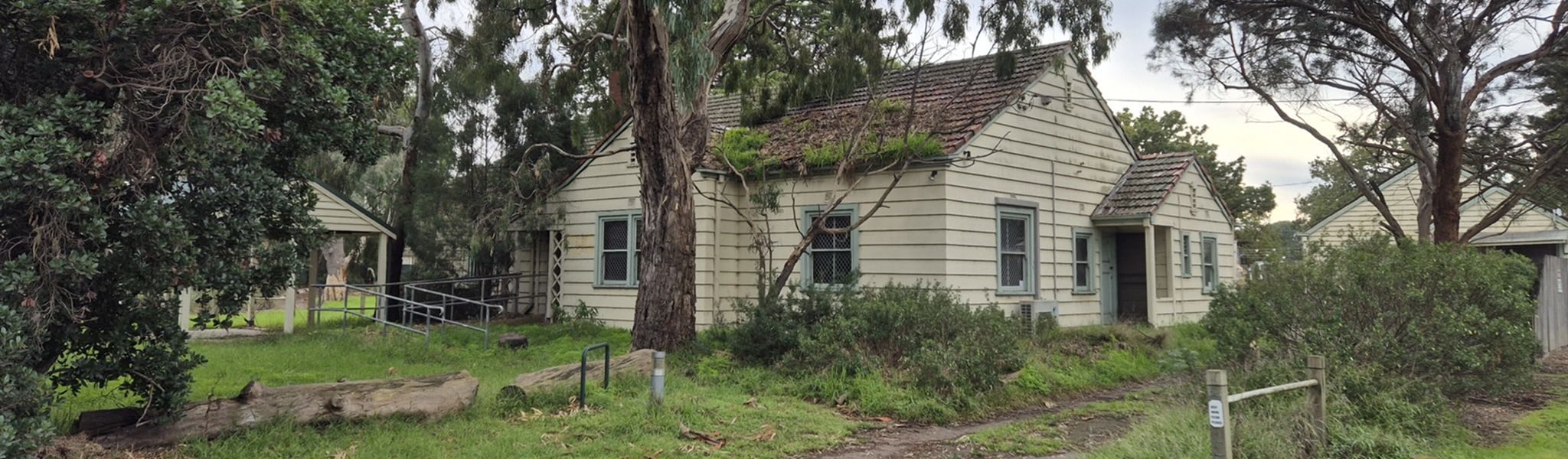
Not far from the Melbourne CBD, tucked into the parkland at Yarra Bend, there’s a quiet cluster of buildings that meant a great deal to a lot of people in this industry.
The old RMIT surveying field station at Studley Park was where generations of Victorian surveyors got their first real taste of what this profession actually feels like. Not theory on a whiteboard – real instruments, real traverses through the park, real field problems to work through with your hands on the equipment and the sun moving across the sky.
For many who came through Victorian surveying programs over the decades, time at that station was close to a rite of passage. You learned to set up and level an instrument properly. You ran traverses and had to close them. You made mistakes, worked out where the error was, and fixed it. The environment – open parkland, uneven ground, natural features to work around – gave students problems that a classroom simply can’t replicate.
Stavros Digenakis, Director and Engineering Surveyor at Base Surveys, walked past the station recently on a weekend. The buildings are still standing, but idle now. No students, no equipment, no long days working through field exercises. Just a quiet site that used to be something.
It brought back strong memories – and a genuine sense of loss at seeing it no longer in use.
There’s something worth reflecting on in that. The fundamentals that were taught at that field station – how to read conditions, how to troubleshoot a measurement, how to think carefully when your numbers don’t close – are still the foundation of what good surveying looks like today. The instruments have changed dramatically. The software has changed. The way data is recorded, processed, and delivered has transformed almost entirely. But the underlying discipline of getting an accurate measurement and understanding why it is or isn’t correct hasn’t changed at all.
That kind of foundational knowledge takes time to develop, and field experience is a significant part of how it gets built. Hours on instruments in real environments, under real conditions, with real consequences when things go wrong – that’s where a surveyor’s instincts come from. It’s harder to develop that in a fully digital or simulated environment, which is part of what made places like the Yarra Bend field station genuinely valuable.
A lot of very good surveyors came through that building over the years. The work they’ve gone on to do across Victoria – on infrastructure, high-rise, civil, and residential projects – reflects what was built there. The station may be sitting idle, but what it produced is still very much active in the industry.
Base Surveys is built on deep industry experience and field-developed expertise. Learn more about our team.